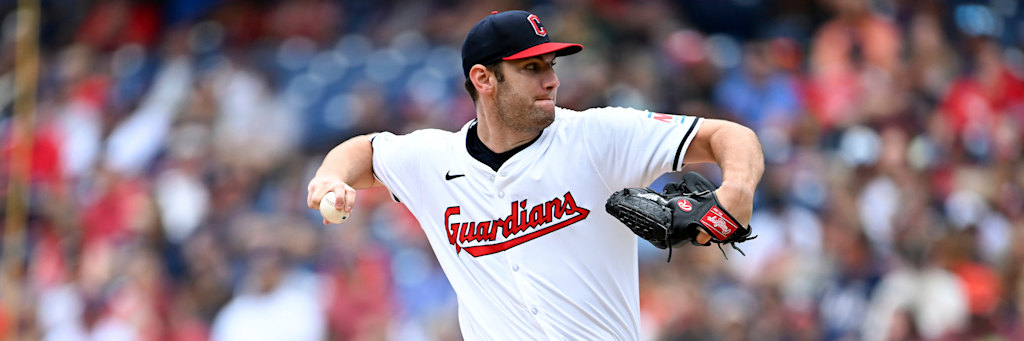
Roki Sasaki has allowed nineteen home runs in eighty-one innings this season. Tonight he walks into Yankee Stadium, and this card is betting the under.
That sentence is uncomfortable on purpose. Good handicapping is not the art of finding bets with no scary part. It is the art of deciding whether the scary part is already in the price, and tonight it is, twice over. The Dodgers-Yankees under 9 pays +100, and the Cleveland Guardians moneyline costs -122. Those two anchor a five-play, 8-unit card, and both of them are price arguments before they are baseball arguments.
Everything else on the board today gets read through one lens. Baseball has been dark since July 12, the All-Star break swallowed four days, and the first night back is the worst night of the season to pretend you know how nine idle offenses will look. So every play here leans where the numbers survive a layoff: run prevention, relief pitching, one extreme ballpark, and the quality of the arm on the mound, the things that do not need timing at the plate to work.
The Even-Money Under: Why +100 Is The Whole Bet
A total of 9 at even money asks you to be right 50 percent of the time. That is the entire pitch, and it is worth sitting with, because totals almost never come that cheap in a marquee game. The market has posted the number it believes is correct, then declined to charge the usual toll for taking the quiet side of it. When a bookmaker hangs a fair number and forgets to tax one side, you take the untaxed side.
| Item | Dodgers | Yankees |
|---|---|---|
| Record | 61-36, .629, lost 3 straight into the break | 54-42, .563, won 4 straight into the break |
| Runs allowed per game | 3.68 (357 in 97) | 3.86 (371 in 96) |
| Team ERA / WHIP | 3.55 / 1.14 | 3.39 / 1.19 |
| Team AVG / OPS | .262 / .777 | .237 / .741 |
| The play | Under 9 at +100, 1.5 units, 50.0% break-even | |
Start with the two numbers that matter most for a total and have nothing to do with anybody's swing. The Dodgers allow 3.68 runs per game. The Yankees allow 3.86. Add them and you get 7.54, which is a full run and a half beneath the posted 9. That is a blunt instrument, it ignores park and it ignores tonight's specific arms, but it establishes the shape of the disagreement. Two of the best run-prevention clubs in the sport are being priced as though their meeting produces an above-average scoring night.
The Yankee offense is the second pillar. New York has scored 462 runs and hits .237 as a team, and it has struck out 867 times, the most of any club in either of tonight's two games. This is a lineup built on 142 home runs and very little in between. Home run offenses are the streakiest offenses in baseball, and a streaky offense walking out of a four-day layoff is the single most reliable under ingredient there is.
Then the bullpens, which is where the under actually gets paid. New York's staff carries a 3.39 ERA, Los Angeles a 3.55, and neither club has any structural reason to hand innings to somebody who does not belong on a big-league mound. Totals do not die in the first inning. They die in the seventh and eighth, when a tired staff gives back four. Tonight both dugouts are fully rested and both bullpens are top-shelf. That is the exact ninth-inning environment an under wants.
Sasaki Is The Risk, And You Should Look Straight At It
Now the honest part, because it is not small. Sasaki is 3-5 with a 5.33 ERA, a 1.36 WHIP, and 33 walks in 81 innings, and those nineteen home runs work out to better than two per nine. His July 2 start against San Diego was a genuine wreck: three innings, seven hits, six earned runs, three home runs. A pitcher who gives up that shape of contact, in that building, against a lineup that has hit 142 of them, is a real way to lose 1.5 units before the fifth inning.
Two things keep the position alive anyway. The first is that Sasaki's most recent outing was his best in a month, six innings and three earned against Colorado on July 8, and he has walked exactly one hitter in each of his last two starts after a five-walk night in San Diego. The second is Gerrit Cole, who is the reason the number is 9 and not 10. Cole owns a 4.04 ERA with 47 strikeouts against 11 walks in 49 innings across nine starts, and his last time out he went 6.1 innings against Tampa Bay and allowed no home runs at all. Eleven walks in forty-nine innings is a pitcher who is not going to gift anybody a crooked number.
The under does not need Sasaki to be good. It needs him to be short and survivable, and then it needs the Dodgers bullpen and its 3.55 ERA to cover the back half against a .237 lineup. That is a materially easier ask than the price implies, and at +100 you are being paid even money to make it.
Progressive Field: Buying Gavin Williams At A 55 Percent Toll
The second play is a straight quality argument. Cleveland Guardians moneyline at -122 for 1 unit, break-even 55.0 percent, and the case is the best arm in either building tonight.
Gavin Williams is 10-4 with a 3.81 ERA and 134 strikeouts in 113.1 innings, a 10.64 K/9 with a .222 opponent average and a 1.15 WHIP. He is also the only pitcher on this card carrying a real workload, nineteen starts and 113 innings, which matters enormously on a night when the other three starters on this card have combined for thirty-three starts all season. His final outing before the break was the best of his year: seven innings against Minnesota on July 9, eleven strikeouts, one walk, three hits, two earned runs.
Cleveland has won four in a row. The bullpen behind Williams has converted 32 saves, more than the Dodgers, Yankees, or Pirates have managed, and Pittsburgh's own relief corps sits at a 4.32 team ERA with a 1.32 WHIP. If this game reaches the seventh inning tied, and games started by Gavin Williams frequently do, the club with 32 saves and the better arms is the one you want holding the ball.
The Jared Jones Problem
Here is what beats the Guardians, and it is specific. On July 8 in Pittsburgh, Jared Jones threw six innings against Atlanta and allowed no hits. None. He walked nobody and struck out eight. That is the last thing this man did on a baseball field, and now he gets four extra days of rest on top of it.
His season line is only eight starts and 35 innings, but the rate stats inside it are legitimate: a 4.37 ERA that his 39 strikeouts, 11 walks, and .220 opponent average all suggest is unkind to him, and a 10.03 K/9 that is the second-best mark in either game tonight. Pittsburgh arrives 7-3 in its last ten with three straight wins, scoring 5.32 runs per game, and the Pirates hit .263 as a team, which is thirty-four points better than the Guardians manage.
Because that is the other half of the truth. Cleveland cannot hit. The Guardians have scored 385 runs, a .229 team average and a .679 OPS, and they own a run differential of minus two despite a 51-46 record. This is a 51-46 team that plays like a .500 team, and asking it to lay -122 against a hot club with a good arm is exactly why this play takes one unit and not three. You are buying Gavin Williams and a bullpen, not an offense.
Reds-Rockies Over 12: Paying The Coors Tax At -110
The card does not live only on run prevention tonight. It also buys the one park on the map that laughs at run prevention. Reds-Rockies over 12 at -110 for 1.5 units is a straight altitude play at Coors Field, where fly balls carry and breaking pitches flatten out. Colorado already scores 4.76 runs a game and Cincinnati 4.16, and those are the sea-level shapes of two offenses that meet a mile above it.
The arms are the other half of the argument, and both invite contact. Brady Singer carries a 4.72 ERA and a 1.47 WHIP across 89.2 innings, and a walk rate that fat puts runners on base in the exact building where runners on base turn into crooked numbers. Gabriel Hughes has made a single start all season, nine innings of big-league work, and Coors is a cruel place to ask a pitcher with that little tread to hold a lineup down. Cincinnati has hit 119 home runs and Colorado 110, enough thump on both sides to reach 12 without either club needing a signature night.
Over 12 is a large number and it is priced like one, which is why this sits at 1.5 units rather than the top of the card. It does not need a track meet, only the ordinary Coors evening where both bullpens get involved and the total climbs into the teens on its own.
Orioles Team Total Under 4.5: Fading The Baltimore Bats At Houston
The next play flips that logic and backs a pitcher quieting a lineup. Baltimore Orioles team total under 4.5 at -133 for 1 unit asks the Orioles to score four runs or fewer at Daikin Park, and the case is Peter Lambert. Houston's right-hander owns a 3.14 ERA, a 1.12 WHIP, and 81 strikeouts across 86 innings, an 8-5 record built on keeping traffic off the bases.
Baltimore averages 4.61 runs a game with a .239 team average and a .722 OPS, so a total of 4.5 is set just beneath the club's own mean. Against a starter running a sub-1.15 WHIP indoors, in a park that plays fair with the roof shut, asking this offense to land under its season rate is the correct side. The break-even at -133 is 57.1 percent, and one unit is the right stake on a team total against a competent arm.
Rangers Team Total Under 3.5: Three Units On Chris Sale
The biggest play on the card is the simplest. Texas Rangers team total under 3.5 at -140 for 3 units, and the entire argument is the left-hander on the mound for Atlanta. Chris Sale is running a 2.20 ERA with a 1.11 WHIP and 117 strikeouts in 98 innings, a 9-6 line that is the best run-prevention profile on the whole board tonight.
Texas scores 4.16 runs a game and hits .245 with a .719 OPS, a middle-of-the-pack offense with no special answer for a lefty missing bats at Sale's rate. Under 3.5 asks the Rangers to be held to three runs or fewer, which is precisely the range a pitcher striking out better than ten per nine drags opposing lineups into. The break-even at -140 is 58.3 percent, and Sale's season says that number is comfortably beatable, which is why this is the three-unit play.
The Sizing And The Break-Even Ladder
| Pick | Line | Stake | Break-even |
|---|---|---|---|
| Dodgers/Yankees under | 9 (+100) | 1.5u | 50.0% |
| Cleveland Guardians moneyline | -122 | 1u | 55.0% |
| Reds/Rockies over | 12 (-110) | 1.5u | 52.4% |
| Baltimore Orioles team total under | 4.5 (-133) | 1u | 57.1% |
| Texas Rangers team total under | 3.5 (-140) | 3u | 58.3% |
The Rangers team total is the maximum play at three units because Chris Sale is the single best pitching edge on the board. Behind it, the under takes the larger of the two Bronx-and-Cleveland stakes for one reason: it is the cheaper bet. At even money it needs a coin flip to break even, and the run-prevention profiles of both clubs say it is meaningfully better than a coin flip. The Guardians take one unit because that position leans on one man. Williams pitches well and Cleveland probably wins. Williams has an ordinary night and this offense has no ability to bail him out.
Five plays, 8 units, no parlays and no correlated stacking. Two price arguments in the Bronx and Cleveland, one altitude total at Coors, and two team-total unders behind front-line arms. On the first night back from a four-day break, that is the disciplined shape.
What Beats This Card
The under dies to Sasaki being the pitcher he was on July 2, three innings and three home runs, in a ballpark that rewards exactly that. Nineteen home runs in eighty-one innings against a lineup with 142 of them is the loudest warning on this page, and a 5.33 ERA does not become a 3.00 ERA because the price is +100. The Guardians play dies to the July 8 version of Jared Jones, who threw six hitless innings against Atlanta and has had a week to rest, running into an offense with a .679 OPS that has scored fewer runs than anyone in either game tonight. Pittsburgh is 7-3 in its last ten and scores 5.32 per game. Cleveland's run differential is minus two. The Coors over dies to the rare quiet night at altitude, a pitchers' duel in the last park you would expect one. The two team-total unders die the same way every under against a good arm dies, to one crooked inning early, a Baltimore or Texas three-spot in the first that the bet never recovers from. Lineups were not final at publication, and nobody, including this desk, knows how any offense looks after four days off. Favored on the inputs, all five. Guaranteed, none.
Final Verdict
The July 17 card presses five plays worth 8 units, two of them pure price arguments. The Dodgers-Yankees under 9 at +100 for 1.5 units buys a 50 percent break-even on a game between clubs that allow 3.68 and 3.86 runs per game, with two bullpens under a 3.60 ERA and a .237 Yankee lineup coming off four days of rust. The Cleveland Guardians moneyline at -122 for 1 unit buys the only pitcher in either game with a full season's workload behind him, 134 strikeouts in 113.1 innings, and the deepest bullpen on the board. Both plays accept a visible flaw, Sasaki's home runs and Cleveland's bat, and both are sized to it. The three run-total plays extend the same discipline: Reds-Rockies over 12 at -110 for 1.5 units buys the Coors environment behind Brady Singer and a one-start Gabriel Hughes, while the Baltimore Orioles team total under 4.5 at -133 for 1 unit and the Texas Rangers team total under 3.5 at -140 for 3 units buy Peter Lambert and Chris Sale holding two ordinary offenses beneath their own averages. For the rest of the week's work, see the July 12 sharp money card, the MLB park factors guide, the over-under by ballpark study, the bankroll management guide, and the full handicapping archive.