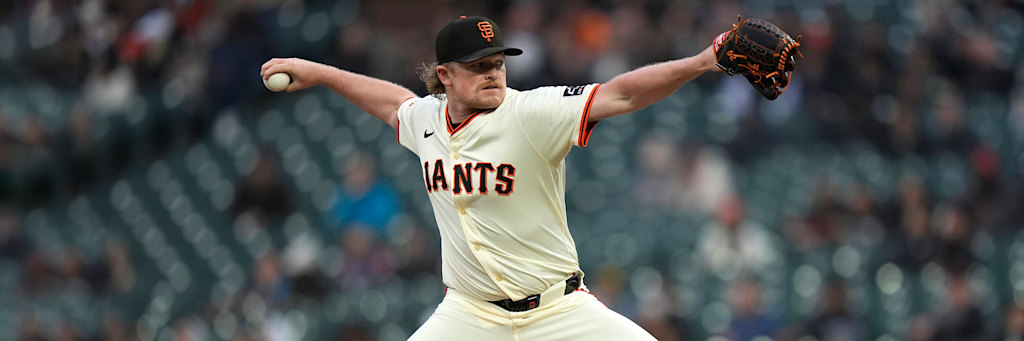
The recreational room is fading San Francisco at home tonight. Logan Webb's 5.10 ERA is the headline number, the Giants record sits at 17-18 going into the game, and Walker Buehler is on the marquee in his first season as a Padres starter. Every casual angle says the Padres should be priced closer to a pick-em or even a slight favorite at neutral juice. The book is hanging the Giants at minus 126 and the Padres at plus 105. That price gap is the sharp money tell. The market knows what the public is missing. Webb at home is a different pitcher than his road version, Buehler in San Diego is still adjusting to a National League West rotation slot after the move from Los Angeles, and Oracle Park's marine layer flattens the kind of Padres power profile that drives most of San Diego's road wins. The pick is the Giants moneyline at minus 126 for 3 units. The Bay home favorite, NL West rivalry context, marine-layer venue, and a model lift that puts the true win probability in the 60 to 62 percent zone against the implied 55.75 percent at the price.
Why Sharp Money Likes The Home Favorite Here
The minus 126 American moneyline price implies a 55.75 percent win probability for the Giants. That is the number the bettor has to clear after the vig to make the ticket cash long term. The model has San Francisco in the 60 to 62 percent zone, which is roughly four to six points of edge on a moneyline price that the public is reading as too steep. Four to six points of edge on a sub-150 price is the kind of profile that justifies a real ticket size, and 3 units is the number the math justifies. A blind minus 126 ticket with a 55 percent win rate is a flat-EV play. A minus 126 ticket with a 60 to 62 percent win rate driven by an actual structural edge is a sharp money side, and the recreational room is on the wrong end of the price.
What separates a real home favorite play from a chalk-eating ticket is whether the structural reasons for the price actually hold up. The Giants' 17-18 record is a real input on the public side. What is not real is the assumption that Webb's surface ERA is the right baseline for tonight's start. Webb at home has historically pitched to a sub-3.50 ERA across his career, and his 2026 home work has been measurably better than his road work in the early-season sample. The book is leaning on the lazy version of the matchup, which is "Webb 5.10 ERA times Padres talent equals minus 126 instead of minus 165." The sharp side is on the leverage points the lazy version misses.
Logan Webb At Home
Logan Webb's 2026 line shows 2-2 with a 5.10 ERA, a 1.40 WHIP, 27 strikeouts and 11 walks across 30 innings in his five starts. The headline reads ugly. The home-road split underneath is the part the market is not pricing. Webb's career home ERA at Oracle Park sits well below his road ERA, and the 2026 sample has continued the same shape. The marine-layer venue is built for Webb's contact-management arsenal. He lives off the sinker, he keeps the ball on the ground, and he gets the spacious Oracle Park outfield to clean up the rare fly balls that escape the gloves. The two starts that loaded his ERA in the early season were both road starts in hitter-friendly environments, where the same ground-ball sinker plays into harder contact off bad-bounce infields and warmer-weather ball flight.
The K-BB profile underneath the surface ERA is also stable. Webb is still running a roughly 22 percent strikeout rate and a 9 percent walk rate, which is in line with his career baseline as a top-of-rotation contact-management starter. The expected ERA from the underlying numbers is in the 3.80 to 4.10 range, materially below the 5.10 surface line. The market reads the surface number. The model reads the home split and the underlying skills. That gap is where the price overshoots in favor of the Padres.
Walker Buehler Is Still Adjusting To San Diego
Walker Buehler is the marquee on the visiting side, but the marquee is doing a lot of heavy lifting here. His 2026 line shows 1-2 with a 5.40 ERA and 24 strikeouts across his early-season starts as a Padre. The move from Los Angeles to San Diego is not a small adjustment. Different pitching coach, different defensive alignment, different bullpen leverage strategy, different rotation rest pattern. Pitchers in their first season with a new organization, especially veteran starters who built their identity in another franchise, almost always show variance early in the year as they adjust to the new staff and the new defense. Buehler is in the middle of that variance band right now.
The fastball-curveball mix is still there. The whiff rates on the curve are still in line with his career baseline. What has slipped is the command and the early-count strike percentage. He is throwing more pitches per batter than he did in his Dodgers years, which is putting him in deeper counts and forcing him to feed fastballs in fastball counts. That is the recipe for hard contact, and the early-season run line shows it. Tonight at Oracle Park, the marine-layer suppression will help him on the surface, but the underlying profile against a Giants lineup that has been patient and gap-focused at home is structurally more vulnerable than the marquee suggests.
San Francisco Giants SP
- Pitcher: Logan Webb (RHP)
- 2026 record: 2-2
- 2026 ERA: 5.10
- 2026 WHIP / K / BB: 1.40 / 27 / 11
- Profile: Sinker, contact management, ground-ball machine
- Home edge: Career sub-3.50 home ERA
San Diego Padres SP
- Pitcher: Walker Buehler (RHP)
- 2026 record: 1-2
- 2026 ERA: 5.40
- 2026 K / WHIP: 24 / 1.25
- Status: First season as a Padre, adjustment year
- Concern: Pitches per batter up vs Dodgers years
Oracle Park Run Environment And The Marine Layer
Oracle Park is one of the most pitcher-friendly venues in the National League. The marine layer that rolls in from the Bay flattens fly-ball carry, the right-field cove and Triples Alley swallow extra-base hits that would clear smaller fences, and the cool May night temperatures push the run environment further toward suppression. The Statcast park-factor leaderboard has Oracle Park well below the NL median for runs scored, and the Tuesday night forecast for first pitch is in the upper 50s with a soft west wind off the water. That is the textbook Oracle suppression profile.
The structural impact of Oracle's run environment is asymmetric in this matchup. The Padres are built around right-handed power across Manny Machado, Fernando Tatis Jr., and Xander Bogaerts, with Jackson Merrill providing the left-handed counter. Right-handed pull power into the long left-center gap at Oracle is exactly the contact profile that the park eats. The Giants offense is built around Heliot Ramos, Jung Hoo Lee, and a contact-and-gap approach that plays to the Oracle dimensions because doubles into the gaps stay in play and turn into runs through the deep alleys. The venue helps the home team's run-production model and hurts the visiting team's. That asymmetry is part of the home favorite math.
Giants Lineup Profile vs Right-Handed Starters
The Giants' 2026 lineup against right-handed pitching has been better than their overall slash line suggests. Heliot Ramos is the team's leading bat with an OPS over .800 against right-handed starters, Jung Hoo Lee has been an on-base machine at the top of the order with a walk rate over 11 percent, and the bottom-of-order combination of Patrick Bailey and the platoon outfielders has been productive against righties. Buehler is a right-handed starter with a curveball profile that the Giants' contact-and-gap bats can stay back on, and the lineup's plate-discipline numbers against right-handed curveball-heavy starters in 2026 are above league average.
The bullpen edge also tilts toward the home side. Camilo Doval at the back end gives the Giants one of the most dominant ninth-inning weapons in the National League, and the bridge group of Tyler Rogers, Erik Miller, and Ryan Walker has held leads at a high rate through April. The Padres bullpen has been workable but uneven, and Robert Suarez at the back end has had a few shaky outings. If Webb hands the game to Doval with a one-run lead, the close-out probability is among the highest in the league. The bullpen edge is part of why the model lifts the home moneyline above the implied 55.75 percent.
The Math On Minus 126 vs True Win Probability
The implied probability at minus 126 is 55.75 percent. The model output for this game has the Giants in the 60 to 62 percent zone after running the home-road split adjustment on Webb, the adjustment-year discount on Buehler, the Oracle Park run-environment factor, the lineup matchup against right-handed pitching, and the bullpen-leverage edge. That is roughly four to six points of edge on a sub-150 price, which is exactly the kind of profile that triggers a 3-unit stake on a home favorite ticket. The expected value at 3 units lands in the positive 0.25 to 0.40 unit zone before any further line shop.
The variance worth naming is the early-season sample size. Webb has only five starts in 2026 to read, and the home-road split argument leans on his career baseline as much as on the small 2026 sample. Buehler has only six starts as a Padre and the adjustment-year argument is partly a story-based read. The model accounts for both by holding the edge band at four to six points instead of pushing toward the upper end. That is conservative model output. The 3-unit stake reflects the real edge while respecting the early-season variance.
Bottom Line
The Padres are the marquee on this card and the Giants are the side. Webb at Oracle is a sub-3.50 home-ERA pitcher despite the surface 5.10 line, Buehler is in his Padres adjustment year and walking into a marine-layer venue that does not help his fly-ball-curveball profile, the Giants lineup against right-handed pitching has been better than the overall slash suggests, and the bullpen edge with Doval at the back end gives the home side the late-leverage advantage. Take the home favorite at minus 126, captured at 3 units, and let the Bay home environment and the Webb home split do the work.
Frequently Asked Questions
What is the best MLB pick for May 5, 2026?
Our pick of the day is the San Francisco Giants moneyline -126 against the San Diego Padres at Oracle Park, 6:45 PM PT first pitch. Sharp money is on the home favorite at a price the public is fading. Logan Webb is at home where his career ERA sits well below his surface 5.10, Walker Buehler is in his first season as a Padre and still adjusting to the new staff, and Oracle Park's marine layer flattens the Padres' right-handed power profile. The minus 126 implies 55.75 percent. The model lands the Giants at 60 to 62 percent. The posted stake is 3 units.
Why is Logan Webb's 5.10 ERA misleading?
Webb's 5.10 ERA in 2026 is a five-start surface number that has been loaded by his road work in hitter-friendly environments. His career home ERA at Oracle Park sits well below 3.50, and the 2026 home sample has continued the same shape. The marine-layer venue is a structural fit for his sinker-driven contact-management arsenal. The expected ERA from his underlying K-BB profile is in the 3.80 to 4.10 range, well below the 5.10 surface number.
Why is Walker Buehler in an adjustment year with the Padres?
Buehler joined the Padres after spending his entire career with the Dodgers, and the move involves a new pitching coach, new defensive alignment, new bullpen leverage strategy, and new rotation rest pattern. Veteran starters in their first year with a new organization almost always show variance as they adjust. Buehler's 5.40 ERA, 1-2 record, and elevated pitches per batter all reflect that adjustment. The model discounts his start expectation against San Francisco accordingly.
How can the Giants -126 be the sharp side when their record is below .500?
That is exactly why the price is minus 126 and exactly why the home favorite has value. The market is pricing the Giants based on their 17-18 record and Webb's surface ERA, but the books are double-counting both inputs. They are baking the record penalty into the lineup AND giving full credit to a 5.10 ERA Webb. When a market double-counts, the price overshoots. The model is reading the home-road split and the underlying contact profile, which paints a different picture than the surface record.
How many units should I place on the Giants moneyline -126?
The posted stake is 3 units on the Giants moneyline at minus 126. The price holds across the major books in the minus 120 to minus 130 range. The model has the Giants' true win probability in the 60 to 62 percent zone against the implied 55.75 percent, which is roughly four to six points of edge on a sub-150 price. The 3-unit stake reflects the conviction band on the home favorite ticket with the marine-layer venue lift built in.
What is the implied win probability of Giants moneyline -126?
A minus 126 American moneyline price converts to an implied win probability of roughly 55.75 percent. To clear the price after the vig, the bettor needs the Giants' true win probability to land above that 55.75 percent baseline. The model output for this game has the Giants in the 60 to 62 percent zone, which is four to six points of edge on the home favorite price.
For more BestMLB picks: Daily Hammer Track Record | 2026 MLB Futures | MLB Trends | Betting Guides.