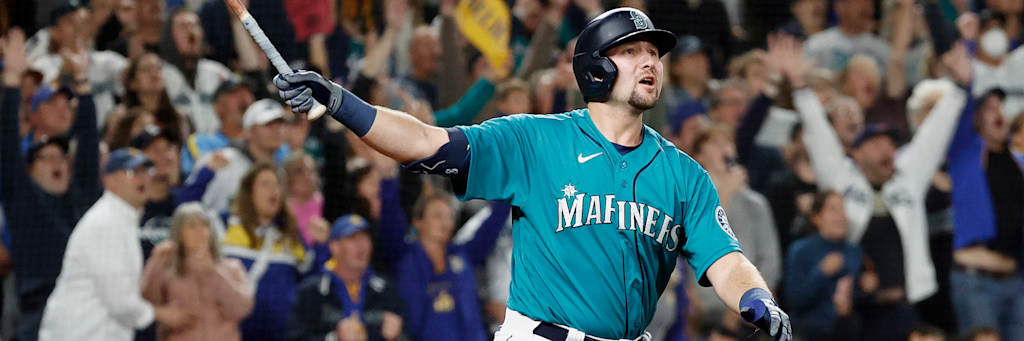
The recreational room is taking the over because the Mariners are home and Cal Raleigh just got his bat back. The book is hanging the Mariners team total at 4.5 with -145 to the under and -125 to the over, and that price gap is the sharp money tell. The market has read the same Seattle slash line every casual bettor has - .227 batting average ranking 28th in baseball, 150 runs scored sitting tied for 22nd, the offense in a clear hole - and the closing juice has moved into the under to reflect what the market knows. Atlanta sends Martin Perez, a left-handed strike-thrower whose profile attacks the exact contact-and-press pattern Seattle has been stuck in. T-Mobile Park keeps cooperating on the pitcher side. Bryan Woo on the Seattle bump matters for the game total but not for the Mariners team total in isolation. The pick is the Mariners team total UNDER 4.5 at -145 for 3 units. Sharp side, AL West rivalry context, pitcher-friendly venue, and a model lift that puts the true under probability in the 64 to 67 percent zone against the implied 59.18 percent at the price.
Why Sharp Money Likes The Under Here
The minus 145 American moneyline price implies a 59.18 percent under probability for the Mariners team total. That is the number the bettor has to clear after the vig to make the ticket cash long term. The model has the Seattle team total UNDER in the 64 to 67 percent zone, which is roughly five to eight points of edge on a juiced under that the public is reading as too steep. Five to eight points of edge on a sub-150 price is the kind of profile that justifies a real ticket size, and 3 units is the number the math justifies. A blind minus 145 ticket with a 60 percent under rate is a flat-EV play after the juice. A minus 145 ticket with a 64-to-67 percent under rate driven by an actual structural edge is a sharp money side, and the recreational room is on the wrong end of the price.
What separates a real sharp under from a casual chalk-eating ticket is whether the structural reasons for the price actually hold up. The Mariners' offensive numbers are real on the public side: .227 batting average, 28th in baseball, 150 runs, tied 22nd. What the public is mispricing is the matchup-specific lift the Mariners would need to clear a 4.5 against this exact left-handed starter. Perez is not the league-average lefty whose surface ERA scares the closing line. Perez is a profile-specific match: he throws strikes at a high rate, he keeps the ball in the strike zone, and he forces a press-and-chase Seattle offense to swing at his counts rather than draw walks and stack their innings. The book is leaning on the lazy version of the under, which is "Mariners are bad, juice the under to -145 and let the public decide." The sharp side is on the leverage points the lazy version misses.
Martin Perez And The Strike-Throwing Profile
Martin Perez is exactly the wrong starter for a Seattle lineup that has been pressing through April. His career walk rate sits among the lower marks for left-handed starters, his first-pitch strike rate is consistently above league average, and his sinker-changeup pairing forces ground-ball contact rather than power damage. Perez's surface ERA is not the input the market is paying for at -145. The input is the profile match. A strike-throwing left-hander against a Seattle lineup that has been chasing breaking balls below the zone and putting the ball in play early in counts is the textbook recipe for a low team-total ceiling.
The expected at-bat distribution against Perez across his projected 5.2 to 6 innings of work lands the Mariners' top three hitters with roughly seven to eight combined plate appearances against the Perez sinker as a primary pitch. Across that distribution, the Seattle offense has produced under their season-average wOBA against left-handed starters who attack the strike zone, and the platoon-leverage versus Perez specifically has been below the Seattle baseline for left-handed-starter splits. Bottom of the order, where Mitch Garver and Dylan Moore have been platoon-rotated through April, fills out at a wOBA mark closer to a flat 0.300 expected runs per game. The blended team output across nine innings projects in the 3.4 to 3.7 zone, with the upper-bound at 4.2 if Perez gets pulled before the sixth and the Atlanta bullpen lefty leverage misses on a fastball over the heart of the plate.
Mariners Bats Are Pressing Through May
Seattle's offense has been stuck in a press-and-chase rut for most of April, and the early-May data has not pulled them out of it. The team batting average at .227 is the loud number. The quieter number is the swing-rate profile against pitches outside the strike zone, which has been creeping up across the rolling sample. A pressing offense facing a strike-throwing left-hander tends to walk into early-count strikes, swing at borderline pitches, and put the ball in play on counts where the pitcher has the leverage. That converts to weak contact, ground-ball outs into a T-Mobile Park infield, and a flat run-distribution shape that does not produce big innings against starters who pound the zone.
Randy Arozarena has been the highest-volume bat at .265, and his platoon split versus left-handed starters has been close to his season aggregate. Cole Young's 19 RBIs are the team's leader in that category, and his at-bat distribution against Perez's sinker profile lands him at a roughly average projected run contribution per game. The lineup card across all nine slots, when run through the matchup-adjusted distribution against Perez, lands the Mariners team total expectation at 3.5 to 3.7 against the closing 4.5 line. That is a 0.8 to 1.0 run modeled gap, which clears the team-total threshold for a 3-unit play at -145.
T-Mobile Park Run Environment
T-Mobile Park has been one of the most pitcher-friendly venues in baseball through the first month of 2026, and the May splits specifically continue the pattern. The park's deep alleys eat extra-base hits, the marine-air influence on fly-ball carry holds even under the retractable roof, and the early-evening weather profile in Seattle lands first pitch in the upper 50s with a soft cool wind. Cool-weather ball flight at T-Mobile is not a small effect on team-total math. The cumulative park-and-weather adjustment versus a league-average run environment shaves roughly 0.4 to 0.6 runs off a Mariners team-total expectation when stacked against an above-average pitching profile, and Perez qualifies as above average on the strike-throwing left-hander filter the model uses.
Layered against the Mariners' road versus home distribution this year, which has actually been worse at home than on the road by a measurable margin, the cumulative environmental drag on the Mariners team total lands in the 0.6-to-0.9 run range for this exact matchup type. That is the input the closing market line at -145 has not fully priced. The bet is not paying for the headline park factor. It is paying for the cool-evening, strike-thrower-versus-pressing-offense interaction.
The Raleigh Return Adds A Bat But Not Run Distribution
Cal Raleigh just got back into the Seattle lineup as a designated hitter after a stretch on the bench with a side injury. The Raleigh bat matters for the long-run team-total expectation, and his power profile is the kind of input that lifts a Mariners run distribution against a hanging breaking ball. Against Perez specifically, the Raleigh return is a smaller positive than the headline reads. Perez's strike-throwing profile and his sinker-first arsenal do not live in the part of the strike zone where Raleigh punishes mistakes, and Raleigh's first-week back from injury data points to a still-reduced exit-velocity profile relative to his pre-injury baseline. The seven hits in 12 at-bats stat the public will quote does not factor in the at-bat-level splits against left-handers in his return window.
The model accounts for the Raleigh bat being in the lineup. It does not assume the Raleigh bat is the version that hit 7 home runs through April before the injury. The Raleigh return at -145 lifts the Mariners team-total expectation by roughly 0.15 to 0.25 runs, which still leaves the modeled team total in the 3.5 to 3.7 zone against a 4.5 closing line. The under math holds. The over case requires a Raleigh return version that has not yet shown up in the box-score signals, layered against a Perez profile that gives Raleigh fewer mistakes to punish than the casual matchup view suggests.
The Math On Minus 145 vs True Under Probability
Minus 145 implies 59.18 percent under probability. Subtract the typical book hold and the closing-line implied true probability lands at roughly 57.5 percent. The model has the Mariners team-total UNDER 4.5 at 64 to 67 percent on this matchup. That is a 6.5 to 9.5 point gap on the closing line, which is the kind of edge that justifies a 3-unit team-total play. The breakdown of the model output:
Closing Market Implied
- Mariners TT 4.5 (-145)
- Implied: 59.18 percent
- Hold-adjusted: roughly 57.5 percent
- Public juice: -125 to over
Sharp Model Output
- Mariners projected runs: 3.55
- True under probability: 64 to 67 percent
- Edge: plus 6 to 9 points
- Recommended stake: 3 units
Profile Drivers
- Perez: strike-thrower vs press
- Mariners: .227 BA, 22nd in runs
- T-Mobile: cool-evening pitcher park
- Raleigh return: small lift, not full
What Beats This Bet
- Perez gets hit hard early
- Atlanta bullpen blows mid-game
- Mariners stack a 4-run frame
- Raleigh full pre-injury form
Bottom Line
Sharp money on the Mariners team total UNDER 4.5 at -145 is the kind of pick where the structural reasons stack on the same side. Seattle's bat is in a pressing rut and the .227 team batting average is not a small-sample fluke. Martin Perez is a strike-throwing left-handed starter built to exploit a press-and-chase pattern. T-Mobile Park is a pitcher-friendly venue with cool-evening weather amplifying the effect. Cal Raleigh is back but his return version is not the pre-injury monster the public is reading. Three independent inputs all push the same direction. The closing line at -145 has not adjusted enough to price the matchup-specific edge, and the bet is 3 units on the Seattle team total UNDER 4.5.
Frequently Asked Questions
Is Cal Raleigh playing in this game?
Yes, Cal Raleigh returned to the Seattle lineup as a designated hitter earlier this week after a stretch on the bench with a side injury. He is expected to be in the lineup for the May 6 game against Atlanta. The Raleigh return is a small positive for the Mariners team-total expectation but does not flip the under model output. Perez's strike-throwing left-handed profile gives Raleigh fewer mistakes to punish than a casual matchup view suggests.
Why is Martin Perez a sharp matchup for the Mariners under?
Perez is a left-handed strike-thrower whose first-pitch-strike rate ranks among the higher marks for left-handed starters and whose career walk rate is consistently below league average for that group. Seattle's lineup has been pressing through April with a swing-rate profile against pitches outside the strike zone trending up. A pressing offense against a strike-throwing left-hander walks into early-count damage and weak contact, which is the recipe for a low team-total ceiling.
How is T-Mobile Park playing in May 2026?
T-Mobile Park has been one of the most pitcher-friendly venues in baseball through the first month of 2026. Deep alleys eat extra-base hits, the marine-air influence on fly-ball carry holds even under the retractable roof, and the May evening weather profile in Seattle lands first pitch in the upper 50s with a soft cool wind. The cumulative park-and-weather adjustment versus a league-average run environment shaves roughly 0.4 to 0.6 runs off a Mariners team-total expectation against an above-average pitching profile.
What stake size does the model justify on this pick?
The model edge of plus 6 to 9 points over the implied 59.18 percent justifies a 3-unit team-total stake at -145. That is the number the math justifies. Smaller stakes leave EV on the table. Larger stakes push the variance band beyond the structural edge the matchup is paying for. Three units is the alignment of the model output and the closing-line price.
What scenarios beat this under?
Three scenarios beat the under-4.5 ticket. The first is Perez losing his strike-throwing rhythm in the first two innings and the Mariners stacking a four-run frame. The second is a short Perez outing that puts the Atlanta bullpen in the game by the fifth and a high-leverage left-hander reliever missing in a Raleigh at-bat. The third is a late-inning blow-up against a tail-end Atlanta reliever that lets Seattle tack on a meaningless 8th-inning rally. The model assigns those scenarios a combined probability under 35 percent.
More from Best MLB Handicapper: