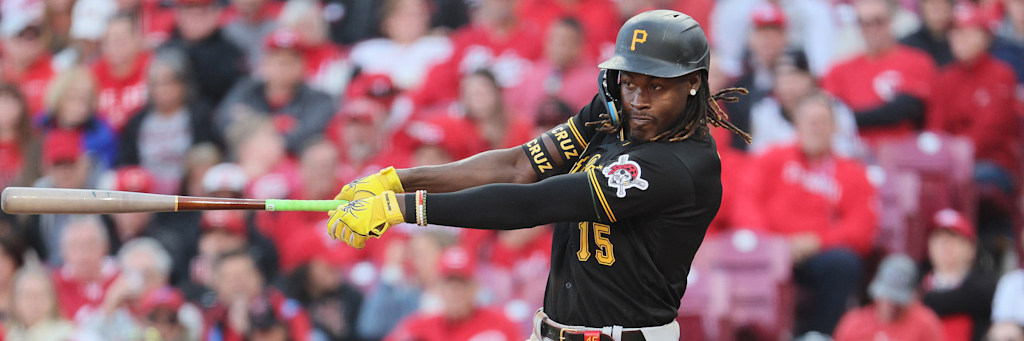
One game, one team, one number. The Colorado Rockies are home dogs at plus 184 against the Atlanta Braves at Coors Field on Saturday night, and the sharp money is on the side that the public will not touch with a ten-foot pole. The marquee tells you everything the recreational bettor wants to know: Chris Sale, the National League ace, 5-1 with a 2.31 ERA, against a Rockies club that the market has buried at 14-18 with a payroll built for development rather than May contention. The number that the marquee does not tell you is what happens when that ace stuff travels 1,500 miles into 5,200 feet of elevation, and what happens when the Rockies hand the ball to Chase Dollander in the bulk role behind an opener at home, where his ERA is sitting at 1.74 with opponents hitting .184 against him. The pick is the Rockies moneyline at plus 184, three units, and the dog price lives exactly where the books always misprice these spots: at the intersection of name brand and altitude.
Where The Sharp Dog Price Lives
The plus 184 American moneyline price implies a 35.2 percent win probability. That is the number the bettor has to clear after the vig to make the ticket cash long term. The model has the Rockies in the 38 to 40 percent zone, and the Polymarket prediction market is sitting at roughly 39 percent on the Colorado side. Three to five points of edge on a triple-digit price is exactly where the size of the ticket starts to scale up rather than down. A one-unit play on plus 184 with a 35.5 percent edge is fine, but the structural setup here, with the venue, the pitching matchup, and the opener plan all stacked the same direction, is what justifies pushing it to three units. The book is paying you 1.84 to 1 on a 38 to 40 percent shot. That math compounds over a season the same way the favorite math compounds the other way, and the books know it. That is why the recreational money has bet this line down to plus 184 in the first place. They want the sharp action to come in and bet it down further.
What separates a good plus money play from a coin flip is whether the structural reasons for the price actually hold up. The Rockies are a 14-18 team. That part of the price is real. What is not real is the assumption that 5,200 feet of elevation does nothing to a flyout-prone left-handed slider artist who lives on the bottom of the zone. That assumption is exactly what the books are leaning on when they hang plus 184 instead of plus 165. The sharp side is on the leverage point: the ballpark, not the record.
Chris Sale At Altitude Is Not Sale At Sea Level
Chris Sale at sea level in 2026 has been everything the Atlanta Braves paid for. The 5-1 record, the 2.31 ERA, the sub-1 WHIP, the recently captured 150th career win at the end of April: all of it is the resume of a pitcher operating at the absolute top of the National League. None of those numbers were generated at Coors Field. They were generated in Atlanta, Philadelphia, Arizona, and the rest of the road slate, all at substantially lower altitudes than what waits for him on Saturday night in Denver. The thin air at Coors does specific things to a specific kind of pitcher, and Sale is exactly the kind of pitcher who absorbs the worst of the venue effect. He is a fly-ball lefty whose money pitch is a slider that lives on lateral movement. Lateral movement requires air resistance to bite into. Lateral movement is the first thing the altitude eats.
The other half of the Sale profile that does not travel well to Coors is the contact quality he allows when batters do put the ball in play. Sale gets away with elevated home run rates at sea level because his fly-ball outs at Truist Park and at most of the National League road parks die at the warning track. At Coors, those same fly balls clear the wall. The same swing that becomes an F8 in Atlanta becomes a two-run shot in Denver. That is not a guess and it is not a hot take. That is what the historical run environment at altitude has done to every elite left-handed flyball arm that has ever made the trip. Sale will compete and he will throw quality innings. The bet is not on Sale being bad. The bet is on Sale being slightly less ace-level than the marquee, which is all it takes for a 38 to 40 percent dog to cover a plus 184 price.
Dollander At Coors Has Been The Quiet Story Of April
The other half of the case is the home arm. Chase Dollander entered 2026 with the front-office decision to pull him out of the traditional rotation and put him in a bulk role behind an opener, primarily for innings management and to protect the young right-hander's introduction to the major-league environment. Through the first month of the season, the decision has aged remarkably well. Dollander's 2026 line reads 3-2 with a 2.25 ERA across 32 innings, with a 30.0 percent strikeout rate, a 6.9 percent walk rate, a 3.04 FIP and a 3.07 xFIP. Those are top-of-the-rotation peripheral numbers. They are NOT bullpen-quality numbers. They are starter-quality numbers being delivered in a hybrid role that the Rockies have built around him.
The home splits are where it gets interesting. At Coors Field in 2026, Dollander has posted a 1.74 ERA with opponents hitting just .184 against him. Read that twice. A 1.74 ERA at the most hitter-friendly ballpark in baseball is not an accident. The Rockies have done two things at home that have made Dollander effective: they have used the opener strategy to get him into the game with a fresh slate of bottom-half hitters in the second or third inning rather than asking him to face the top of the order in his first frame, and they have given him longer rest between outings than a traditional fifth-starter usage pattern would allow. The result has been a young arm pitching at his ceiling rather than his floor in front of his home crowd.
Atlanta Braves SP
- Pitcher: Chris Sale (LHP)
- 2026 record: 5-1
- 2026 ERA: 2.31
- Profile: Elite NL ace, slider-heavy
- Coors challenge: Lateral break neutralized at altitude
- Travel: Sea level to 5,200 ft
Colorado Rockies Bulk SP
- Pitcher: Chase Dollander (RHP)
- 2026 record: 3-2, 2.25 ERA
- Coors Field 2026: 1.74 ERA, .184 OBA
- K rate: 30.0%
- BB rate: 6.9%
- FIP / xFIP: 3.04 / 3.07
The Opener Plus Bulk Structure Is Working At Home
One of the most underrated structural advantages in the modern game is the opener plus bulk-reliever plan when it is run by a team that actually commits to it. The Rockies have committed to it with Dollander. The opener takes the first inning or two off the bulk arm, which means the bulk arm never has to face the top of the lineup with a cold bullpen sitting behind him in the third or fourth inning if things go sideways. That structural insulation is worth runs, and it is especially worth runs at Coors Field, where the third and fourth innings are historically when starters at altitude start to break down. The Rockies have engineered that breakdown out of Dollander's outings entirely by using him in the second-inning or third-inning entry point.
What that does to the bet is significant. The model is not pricing Dollander as a five-inning starter. The model is pricing the run environment that the Rockies are actually constructing in this game, which is roughly two innings of opener, four to six innings of Dollander in the bulk role, and the back of the bullpen for the final two or three frames. That structure has produced the 1.74 ERA at home this year. The book is pricing Sale as the better arm in the matchup and that part is correct, but the gap between Sale and the Rockies' actual pitching plan is much smaller than the gap the moneyline implies. Plus 184 is asking the bettor to say the Rockies will lose two-thirds of the time. The model says they will win closer to 40 percent, and the structural pitching plan at home is the entire reason why.
Coors Field Levels The Pitching Gap
The single most important betting fact about Coors Field is that it does not just inflate offense. It compresses the gap between elite pitching and average pitching. At sea level, an ace strikes out 30 percent of the lineup and an average arm strikes out 20 percent, and the run-environment gap between them is roughly 1.5 runs per nine innings. At Coors Field, both of those strikeout numbers come down because breaking pitches break less and contact gets in play more often, and the gap between the ace and the average compresses to about 0.8 runs per nine. That compression is the fundamental edge that the home dog at Coors keeps cashing on, year after year, decade after decade. It is the most predictable structural edge in baseball betting and it is the reason the Rockies have historically beaten their road moneyline ATS performance by a wide margin while playing at home.
The other piece of the Coors equation is the offense. The Rockies are not a high-payroll team and the lineup will not scare anybody on paper, but Coors makes ordinary lineups look above average for one specific reason: the gaps. The outfield at Coors is the largest in the major leagues by total square footage, which means the same line-drive hit that becomes a single in Atlanta becomes a stand-up double or triple in Denver. The Rockies do not need to slug their way into runs. They need to put balls in the gap and let the dimensions do the work. Against a fly-ball lefty whose breaking ball flattens at altitude, the ball-in-play opportunities will be there. The math from there is straightforward: more singles plus doubles equals more runs, more runs against an ace at altitude equals a tighter game, and a tighter game equals a coin flip rather than a 65 percent dog spot.
The Math On Plus 184 vs True Win Probability
Bettors who are new to plus money handicap pick decisions sometimes get hung up on the win rate of the side rather than the expected value of the price. A 40 percent win rate sounds like a losing bet because it is below 50. On a moneyline of plus 184, that 40 percent win rate is one of the most profitable bet profiles you can take all season. The math is not complicated. At plus 184, the bettor risks one unit to win 1.84. If the side cashes 40 percent of the time over a long sample, the expected value is 0.40 times 1.84 minus 0.60 times 1.00, which is plus 0.136 units of edge per ticket. On a three-unit play, that is roughly plus 0.41 units of expected value per game on a single ticket. Run that play 100 times under the same conditions and the expected return is plus 41 units before any further line shop.
This is where the structural angle and the math connect into the bet size. A blind plus 184 ticket with a 35 percent win rate is a coin flip on the vig. A plus 184 ticket with a 38 to 40 percent win rate driven by an actual structural edge is a sharp money play, and the sharp size is bigger than the coin flip size. Three units is not a stretch on this number. Three units is the number that the math justifies. Shop the price for any book hanging plus 185 or better. If the book has moved the line down to plus 175 or lower by the time you are looking, the bet is still positive expected value but the size should come down to two units. The captured number on this ticket is plus 184 and the captured stake is three units.
Where The Rest Of The May 2 Slate Sits
| Game | First Pitch (ET) | Headline Angle | Venue |
|---|---|---|---|
| Braves at Rockies | 8:10 PM | C. Sale vs C. Dollander (bulk) | Coors Field |
| Phillies at Mets | 4:10 PM | NL East division weekend | Citi Field |
| Yankees at Rays | 4:05 PM | AL East road test for the pinstripes | Steinbrenner Field |
| Dodgers at Marlins | 4:10 PM | Dodgers chalk on the road | loanDepot Park |
| Cubs at Reds | 4:10 PM | NL Central run environment | Great American Ball Park |
| Astros at Blue Jays | 3:07 PM | Houston rotation on the road | Rogers Centre |
| Mariners at Diamondbacks | 8:10 PM | Late window dome game | Chase Field |
The Rockies moneyline plus 184 vs the Braves at Coors Field is the official Pick of the Day at BestMLBHandicapper. Our companion site MLBPrediction.com runs its own data-driven angle on the same Saturday slate, and DailyMLBPicks.com takes the AI lens on a separate game. Three different angles, same May 2 card.
Bottom Line
This is the cleanest home dog spot in baseball when the structural pieces line up the way they have for Saturday night. The Rockies are getting plus 184 against an ace whose entire profile is built on lateral break that the altitude flattens and on fly-ball outs that the altitude turns into extra-base hits. The Rockies counter with a bulk-reliever plan built around Chase Dollander, who has been a 1.74 ERA fortress at Coors this season and whose underlying numbers are far better than the surface line. The implied 35.2 percent at plus 184 sits roughly three to five points below where the model and the prediction markets are pricing true win probability. That is the size of edge that justifies the three-unit ticket, and that is exactly where the dog price lives in this kind of spot.
Shop the line. Plus 185 or better is available at multiple books at the time of writing. If the number drifts to plus 175 by first pitch, the bet is still positive value but you scale it back to two units. The captured number on the official ticket is plus 184 and the captured stake is three units. One bet, one game, one number. The Rockies moneyline against Sale at Coors Field is the play.