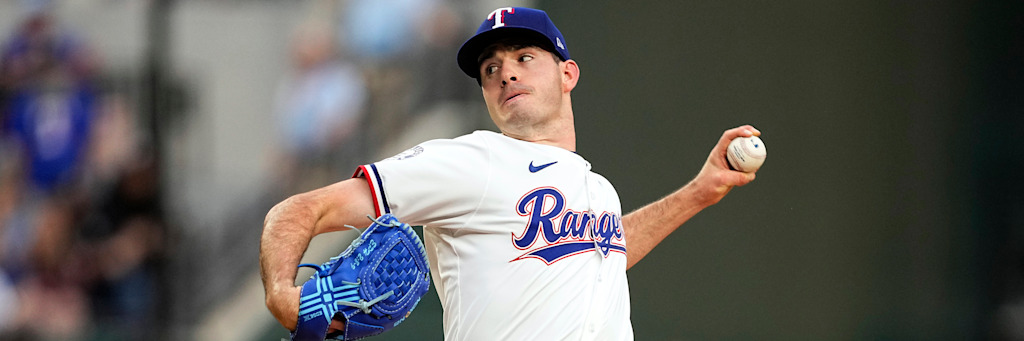
On September 25, 2024, Cody Bradford threw 90 pitches against the Athletics, allowed one earned run across three and two thirds innings, and walked off the mound. He did not appear in a major league game in 2025. He has not appeared in one in 2026 either. At 2:35 this afternoon he takes the ball at Globe Life Field, and the largest stake on today's card, three units on Texas at -156, is sitting directly behind him.
That should feel wrong, and the discomfort is the point. This is not a bet on a pitcher. It is a bet on the four hours of baseball that surround him, on a visiting lineup with a specific and measurable weakness, and on a Texas bullpen that is a full run better than the one it is being compared against. Bradford is the reason the price is only -156 instead of -190. He is not the reason to take it.
THE REHAB LADDER TELLS YOU THE PITCH COUNT
Everything about how this game will be managed is already written down. Texas sent Bradford on a rehab assignment to Double A Frisco on July 12 and moved him up to Triple A Round Rock on July 30. The outings ran in a straight line: one inning on 21 pitches, two innings on 37, three innings on 48, then four innings on 56 pitches at Round Rock with seven strikeouts and no walks.
Four innings. Fifty six pitches. That was six days ago, and it was the ceiling of the entire build-up. A club does not jump a returning starter from 56 pitches to 95, which means the real shape of this afternoon is roughly five innings from Bradford at the absolute outside and twelve to fifteen outs from a bullpen. Handicap the game that way and the starting pitcher matchup stops being the question.
His minor league line across the rehab is worth reading anyway. Between Frisco and Round Rock he threw 12 innings in five appearances, struck out 16 and walked 2. The Frisco portion was three starts, six innings, a 1.50 earned run average and a .182 opponent average. The Round Rock portion was two starts, six innings, a 3.00 earned run average and a 1.17 WHIP. Small samples, all of them, and none of it proves he can retire major league hitters. What it does establish is that the arm is finding the strike zone, which is the single thing that most often deserts a pitcher coming back from a long absence.
SAN FRANCISCO HAS A LEFT-HANDED PROBLEM
Bradford throws left-handed, and the lineup walking into Globe Life Field is built badly for that. San Francisco hits .254 with a .425 slugging percentage and a .738 OPS against right-handed pitching. Against left-handers those numbers collapse to .246, a .384 slugging percentage and a .685 OPS. Fifty three points of OPS, and the power evaporates entirely: 104 of the club's 129 home runs have come off righties, only 25 off lefties across 1,061 at bats.
Now stack the second weakness on top. The Giants have drawn 300 walks this season. That is the fewest in Major League Baseball, 194 behind the Cubs at 494 and 65 behind even a Texas lineup that ranks 21st in the category at 365. The classic failure mode for a pitcher who has been away for twenty two months is command, and the free pass is how that failure shows up on the scoreboard. Bradford is facing the one lineup in the sport least equipped to punish him for it.
Rafael Devers is the genuine threat at .246 with 23 home runs and a .793 OPS, Jung Hoo Lee is hitting .305, and rookie Bryce Eldridge carries a .795 OPS in 288 plate appearances. Beyond those three the depth thins quickly. Willy Adames is at .222 with a .279 on base percentage across 458 trips, which is a lot of outs in a premium lineup slot.
THE OTHER SHORT LEASH
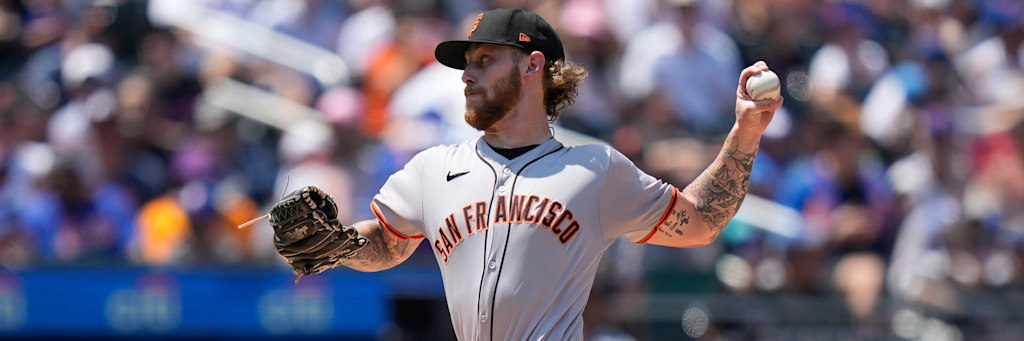
San Francisco is running its own uncertainty out there. Carson Whisenhunt has made four starts this season covering 19 innings, and the results are a 6.63 earned run average, a 1.74 WHIP and a .284 opponent average. He has walked 12 men in those 19 innings, a rate of 5.68 per nine, which is the kind of number that ends afternoons early no matter how the stuff plays.
He has never completed six innings in a major league game. His four outings this year went five innings on 85 pitches at Atlanta, five and two thirds on 87 against Colorado, five on 78 against the Angels, and three and a third on 74 pitches at San Diego on July 31, an outing that cost him seven hits, six earned runs and four walks. The arsenal is unusual and interesting: a changeup he throws 37.7 percent of the time at 83.2 miles per hour, a four seam fastball 34.9 percent of the time at 92.8, and a slider a quarter of the time at 84.8. When the changeup is landing he misses bats, and he struck out seven Angels in five innings on July 26. When it is not, the walks arrive in clusters.
Texas happens to be the wrong opponent for a left-hander to be imprecise against. The Rangers hit .252 with a .738 OPS against left-handed pitching compared with .713 against righties, one of the few splits where this offense actually improves.
WHICH MAKES THIS A BULLPEN GAME NOBODY LABELED ONE
Two starters on short leashes hand the decision to the relief corps, and that comparison is not close. Texas relievers have thrown 408.1 innings at a 4.36 earned run average with a 1.34 WHIP and 51 home runs allowed. San Francisco relievers have thrown 389.1 innings at 4.28 with a 1.41 WHIP. Those are near enough to call even on rate, and then the context breaks the tie. The Rangers are 20-12 in one run games this season. The Giants are 10-20. Texas has converted 32 saves; San Francisco has converted 21.
Road performance widens it further. San Francisco is 22-39 away from Oracle Park, one of the worst travelling records in the sport, against a Texas club that is 29-26 at home. The venue itself is neutral to slightly generous: Globe Life Field runs 329 feet down the left field line, 372 to left center, 407 to straightaway center, 374 to right center and 326 to right, on artificial turf under a retractable roof that takes weather out of the equation entirely.
Yesterday's game in this same building is instructive. Texas won 5-4, one day after San Francisco had won 5-1 in the series opener. Two one run swings inside two days, and the club that has been winning those all season is the one laying the price today.
THE HONEST COUNTERPOINT
Laying -156 requires winning 60.9 percent of the time, and there is a real case that this Texas team is not a 60.9 percent anything. The Rangers rank 26th in baseball at 4.13 runs per game, ahead of only four clubs. They are 56-58, which is to say a losing team, and they have gone 3-7 over their last ten games including a stretch of six straight losses that ran through Tampa Bay and Houston. Their run differential is negative: 471 scored, 510 allowed.
The lineup is top heavy and streaky. Joc Pederson is the best bat at .250 with 20 home runs and an .839 OPS, Ezequiel Duran has driven in 63 runs, and Jake Burger has 19 home runs with a .295 on base percentage. Evan Carter is hitting .201. Asking that group to reliably beat a 6.63 earned run average is fair. Asking it to beat San Francisco's bullpen in the seventh and eighth is a different question.
And the unavoidable one: nobody knows what Bradford has. Twenty two months is a long time. A pitcher can throw four clean innings at Round Rock and give up four runs in the second at the big league level, and if that happens the bullpen enters in a hole against a lineup that just put five on this same team on Monday. Three units is the largest position of the day and it carries the largest share of genuine unknown. That is worth saying out loud rather than papering over.
HOW TO SIZE IT
| Input | Texas | San Francisco | Why It Matters |
|---|---|---|---|
| Record | 56-58 | 48-66 | Eight game gap, and Texas is 2.5 back in the AL West |
| Venue split | 29-26 at home | 22-39 on the road | The widest single edge on the ticket |
| One run games | 20-12 | 10-20 | Two short starters make a close game likely |
| Bullpen ERA | 4.36 in 408.1 IP | 4.28 in 389.1 IP | Even on rate, decided by leverage results |
| Versus LHP | .738 OPS | .685 OPS | Both starters throw left-handed |
| Walks drawn | 365 | 300, fewest in MLB | A rusty arm's likeliest mistake goes unpunished |
Play it as the rubber game of a three game set between two teams separated by eight games in the standings and twenty one games in the National League West race, where the home side is the one that wins coin flips and the road side is the one that loses them. The starting pitcher on the ticket is the least knowable part of it, and everything else on the page points the same direction.
One last piece of process. If Bradford is pulled after three innings with the game tied, that is the expected script rather than a disaster, and the ticket is still live. The scenario that actually kills it is a four run second inning, because it forces the Rangers offense, 26th in the sport at scoring runs, to do the one thing it has been worst at all season.