The cleanest run-line plays on a board are the ones where the moneyline price is already so steep that laying the extra run-and-a-half barely costs you anything. Tonight in the Bronx is one of those spots. A first-place team with the best record in the American League is hosting a sub-.500 club, and the man on the mound for the home side owns a 1.82 ERA. When the moneyline on a favorite this strong would normally sit near -180, paying -132 to ask that same favorite to win by two runs is not a stretch. It is the discount. The play is the New York Yankees run line -1.5 at -132 for 3 units, and the entire case is that a dominant rookie arm and a deep lineup turn a likely Yankees win into a likely multi-run Yankees win.
Start with the records, because that is where the gap announces itself. New York is 45-28, the best mark in the American League and the kind of cushion that does not happen by accident over seventy-three games. Cincinnati is 35-38, a tier below and treading water under .500. On most nights the Yankees would be a moneyline favorite in the -170 to -185 range against a club this much weaker at home. The run line at -132 lets you buy that same edge while only surrendering the cost of a two-run margin, and against the arm Cincinnati is sending, the two-run margin is exactly where this game is pointed.
Sharp Money MLB Angle: The Run Line Is Cheaper Than The Moneyline
Here is the read the recreational world misses. The public sees -1.5 and assumes it is the riskier ticket, because the favorite now has to win by more than one. But the math runs the other way when the moneyline juice is already heavy. Laying -1.5 at -132 means you are paying less juice than the straight moneyline would charge, in exchange for needing a two-run cushion. When the favorite is a 45-28 club with a 1.82-ERA starter facing a lineup hitting .228 with a .707 OPS, the games this side wins are rarely one-run nail-biters. They are the games where the rookie pitches into the seventh, the bullpen closes it clean, and the Bronx crowd watches a comfortable final. That is the profile the run line is built to capture.
Notice that the market agrees on the direction. Cincinnati's run line came back at +1.5 priced around +101, which tells you books expect this game to live inside that two-run window often enough to charge nearly even money on the dog side getting the run and a half. Sharp money does not fade a first-place team behind a sub-2.00 ERA arm for the privilege of laying a number the book itself is shading toward. It takes the favorite at the cheaper run-line price and lets the pitching matchup do the rest.
The Schlittler Dominance Carries The Margin
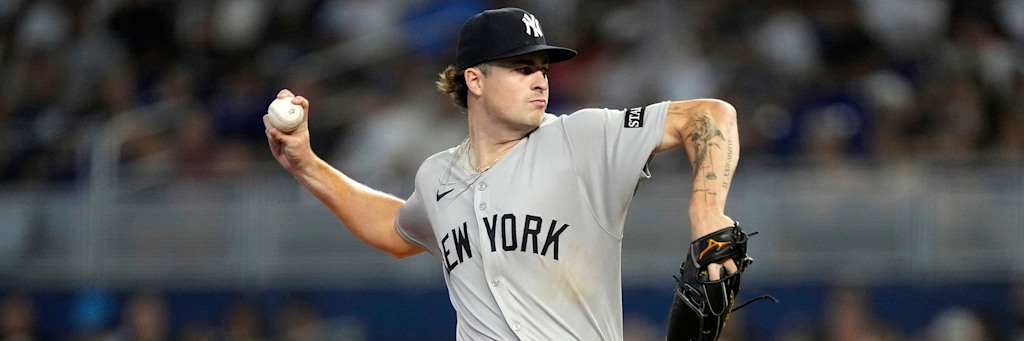
His arm is why the cushion is realistic and not a reach. Cam Schlittler takes the ball for New York carrying a 1.82 ERA across 89.0 innings with a 0.91 WHIP, a 7-3 record, and a .195 opponent average over fifteen starts. That WHIP is the number that separates a favorite who covers a run line from one who survives by a single run. Roughly nine baserunners per nine innings means Cincinnati will struggle to string together the traffic it needs to keep a game close, and a pitcher who works deep hands the late innings to a rested bullpen protecting a lead rather than a tired one nursing it. Schlittler does not give the crooked innings back, and that is what lets a Yankees lead grow rather than stall.
Cincinnati counters with Rhett Lowder, and the gap is the play. Lowder is 3-3 with a 4.60 ERA, but the number that matters is the 1.43 WHIP and the 25 walks across just 47.0 innings. He puts men on base at a far higher clip than Schlittler, and a Yankees offense that has scored 381 runs, hitting .246 with a .774 OPS and 110 home runs, is precisely the disciplined, power-laden lineup that turns free traffic into multi-run innings. When the favorite's starter limits damage and the dog's starter invites it, the run-prevention math does not just favor a Yankees win. It favors a Yankees win by more than one.
Verified Game Setup
| Team | Record | Probable starter |
|---|---|---|
| New York Yankees (home favorite) | 45-28 | Cam Schlittler, 7-3, 1.82 ERA, 0.91 WHIP, 96 K in 89.0 IP |
| Cincinnati Reds (road dog) | 35-38 | Rhett Lowder, 3-3, 4.60 ERA, 1.43 WHIP, 37 K in 47.0 IP |
Best record in the league, the better starter by a full run and a half of ERA, and a lineup with 110 home runs at home. Three boxes the sharp side wants checked before laying a run line, all checked.
Form And The Run-Prevention Backbone
Form supports the number. The Yankees enter on a winning note and have built that 45-28 mark on a balance of power and pitching, a 381-run offense paired with a staff that has kept them at the top of the American League standings since the spring. The Reds at 35-38 sit ten and a half games back in the National League Central, a club that wins its share but rarely buries anyone and rarely gets buried itself. That is the recipe for a game where the better team wins, and the question is only by how much. With Schlittler suppressing contact and the Yankees' bats built to punish Lowder's walks, the most likely path to a New York win runs through a multi-run margin, not a one-run escape.
This is not a bet that needs a blowout, though a Yankees lineup at home is capable of one. It is a bet that needs the better team, behind the far better arm, to do what it has done all season and win comfortably enough to clear a run and a half.
The Honest Counterpoint
No run line is free money, and laying -1.5 carries a real failure mode. The single most common way this ticket loses is the one-run win, the Yankees taking the game 3-2 or 4-3 while the Reds backdoor a meaningless late run to stay inside the number. Baseball is the most variance-heavy sport on any given night, and a 35-38 club is good enough to keep a game tight, especially if Lowder finds a clean version of himself for five innings. A Schlittler exit handing a slim lead to the bullpen, or a quiet night from the Yankees bats against an arm they have not seen, can leave this as a one-run game that wins the moneyline but loses the run line. That live variance is exactly why this is a measured 3-unit play on a strong edge rather than a max-confidence pound.
How The Price Sets The Stake
At -132 the run line needs to cash a little over 56 percent of the time to break even, and a 45-28 club behind a 0.91-WHIP arm against a sub-.500 road dog with a walk-prone starter clears that bar in any honest projection of margin. The edge here is strong, a dominant favorite at a discounted run-line price with a matchup that points toward a multi-run result, which is why the stake sits at a confident 3 units. Sharp sizing tracks the size of the edge, and a 1.82-ERA arm against a 1.43-WHIP arm with a power lineup behind him rates as one of the cleaner run-line spots on the board.
What Beats It
A one-run Yankees win beats this ticket, and so does the upset outright. A sharp Lowder start that keeps the Reds within a run, an early Schlittler exit that hands the bullpen a one-run lead to protect, or a quiet Yankees offense that wins 2-1 without the cushion all flip a winning side into a losing run line. The dog getting +1.5 is priced near even money for a reason, and the gap between a Yankees win and a Yankees win by two is the entire risk on this play. The ticket leans on New York being not just the better team but the more dominant one across nine innings, the most likely script but never a guaranteed one.
Final Verdict
The sharp play is the New York Yankees run line -1.5 at -132 for 3 units at Yankee Stadium. The edge is the run-line discount on a first-place club, a 45-28 leader with the best record in the American League, a 1.82-ERA arm in Cam Schlittler, and a 381-run offense facing a 1.43-WHIP Rhett Lowder who walks too many. With the Reds priced near even money getting a run and a half, the books are already telling you they expect a two-run game, and the sharp side buys the favorite at the cheaper number. One-run variance and all, this is where the value sits. For more from this board, see our look at the Braves road favorite case behind Martin Perez, our breakdown of the Giants moneyline read on Logan Webb, and the full handicapping archive for how these favorites have run.